60 g · whole dried seeds of Urtica dioica · a natural whole-food supplement
For the years when the cycle changes.
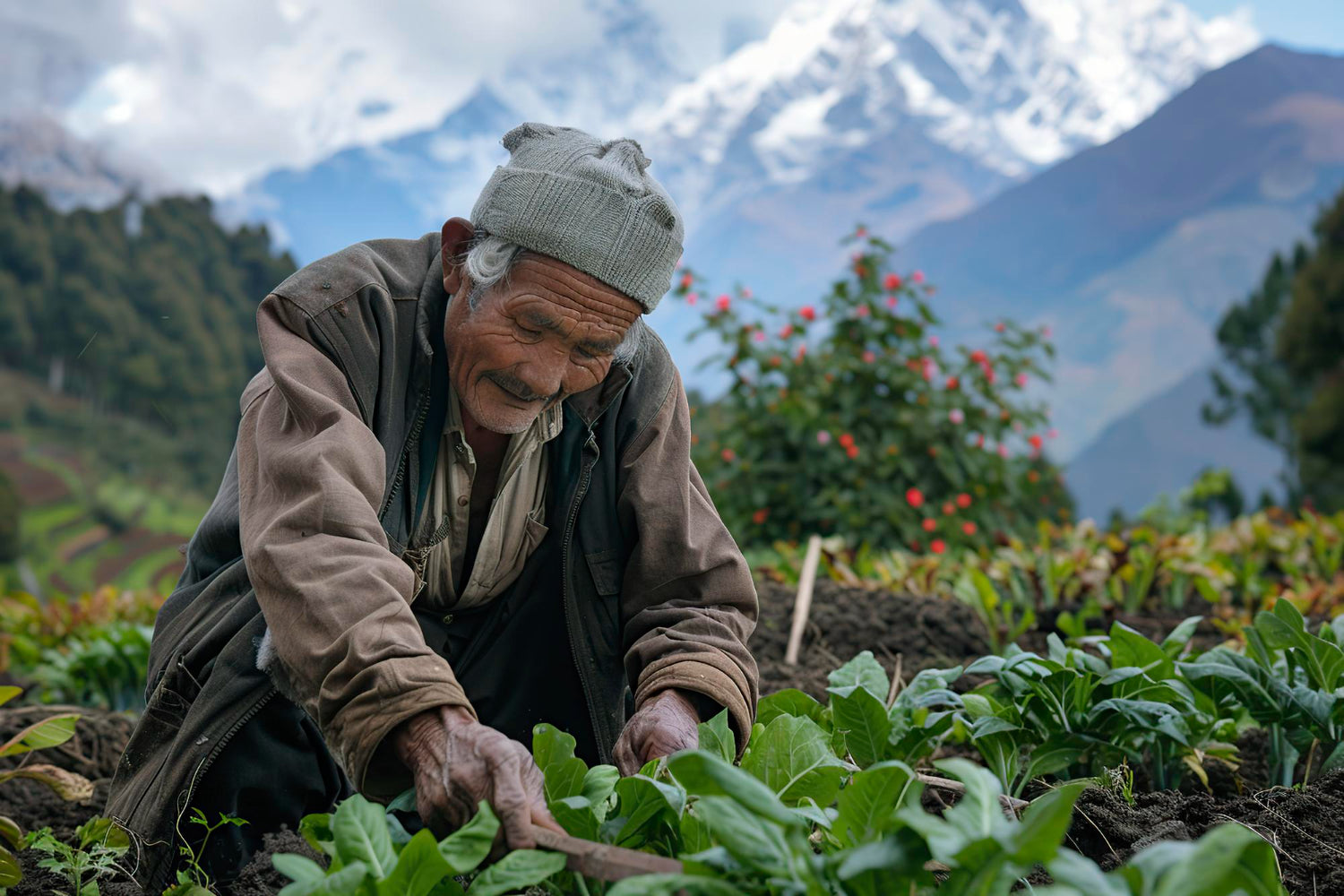
Late in summer, after the nettle has flowered, its stems hang heavy with tiny green seeds. Herbal traditions in the Himalayas and in Europe have long valued them as one of the most nourishing foods a wild plant can offer. Few people in India have tasted them. We think they deserve to be known.
What is in a spoonful
Nettle seeds carry a fatty oil naturally rich in tocopherols (vitamin E), alongside carotenoids, minerals and plant protein. Western herbalists have traditionally used them as a restorative, a food for periods of depletion and fatigue. Formal clinical research on the seeds is still limited, so we offer them as what they have always been: a nourishing whole food, taken daily.
Why it is our food for the cycle change
Perimenopause asks a great deal of the body. Energy becomes less predictable, sleep more fragile, and the nutritional needs of skin, bones and muscles rise just as appetite and routines shift. Nettle seeds are a simple daily habit for these years: a spoonful of whole-plant nourishment from the Himalayas, with nothing added and nothing taken away.
Why this moment
Morning. Herbalists describe nettle seed as gently energising, so it belongs with breakfast.
Perimenopause and beyond. A daily, food-first companion for the transition.
Follicular phase. For cycling women, a nourishing breakfast habit while energy rises.
How to take
1–2 teaspoons (3–6 g) a day. Sprinkle over breakfast, yoghurt, porridge, salads or soups, blend into a smoothie, or steep in hot water as an infusion. Mild, nutty and slightly grassy.
Please note
Not suitable during pregnancy or for children. Please speak to your doctor if you take blood thinners, diuretics or diabetes medication. This is a food, not a medicine, and is not intended to diagnose, treat or prevent any condition.
Developed using the Endo Neutral framework, and gathered under NTFDP.