


Developed using the Endo Neutral framework
Nettle Leaf Tea · 50 g
Nettle Leaf Tea · 50 g
Couldn't load pickup availability
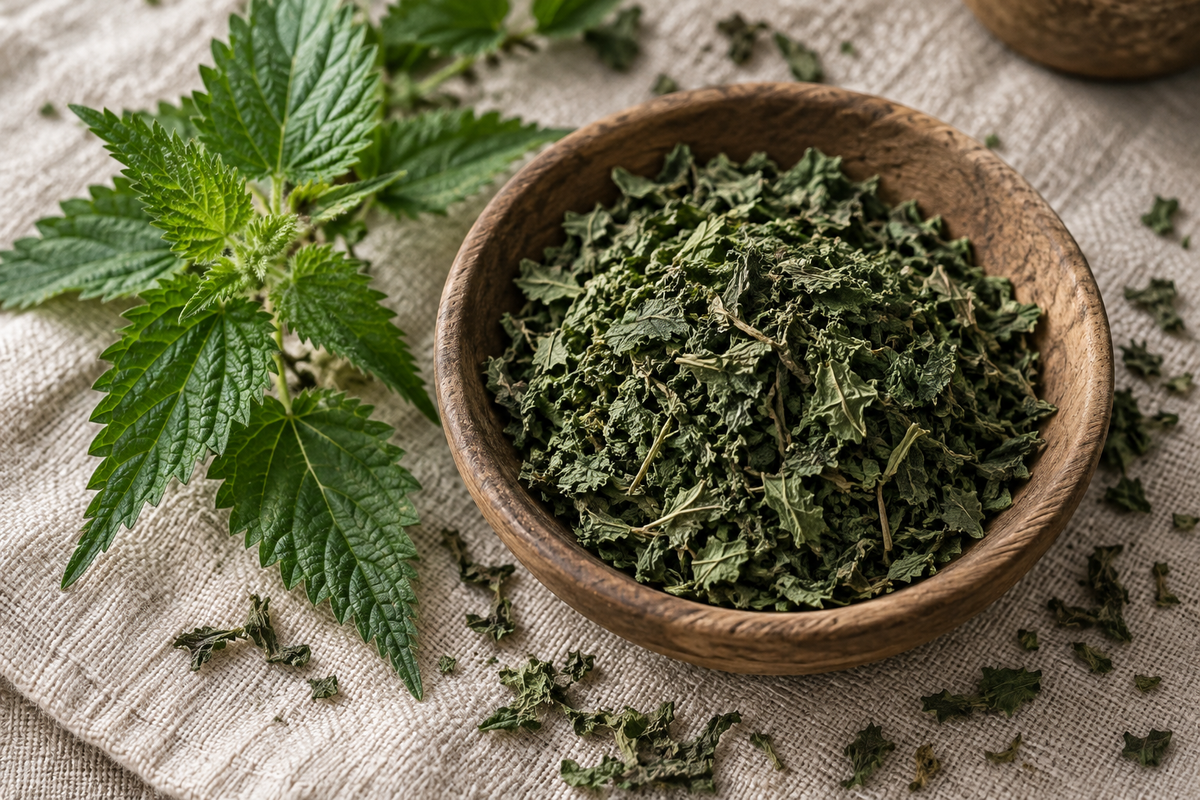
50 g · dried leaves of Urtica dioica (bichhu buti) · caffeine-free
In the Himalayas, stinging nettle has always been food as much as medicine: cooked as greens, dried for winter, brewed as tea. Once dried, the sting is gone and what remains is an earthy, grassy cup.
What is in the cup
Dried nettle leaf is remarkably nutritious: around 30% plant protein with all essential amino acids, and naturally rich in calcium, magnesium, iron and vitamin K. In a double-blind trial, nettle leaf eased seasonal allergy symptoms within a week. We use the leaf only; it is nettle root, not leaf, that is studied for effects on hormone-binding proteins.
Why this moment
Morning. A mineral-rich, caffeine-free start to the day.
Menstrual days. Iron is lost with bleeding, and low iron drives period fatigue. Nettle is a traditional mineral food for these days; a cup is a gentle contribution, not a supplement.
Luteal phase. Low magnesium has been associated with premenstrual symptoms.
Perimenopause and beyond. Bone density falls fastest around the final period. Calcium and vitamin K from food matter more than ever.
How to brew
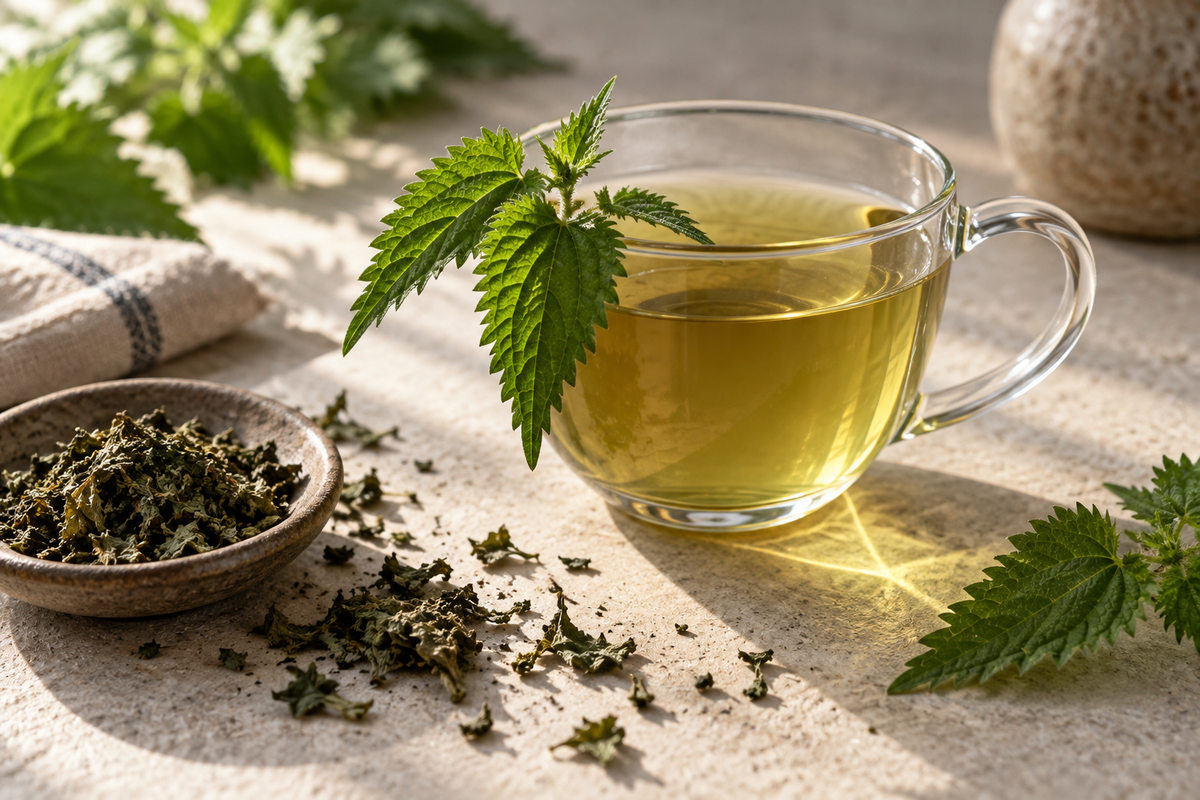
1–2 teaspoons in 200 ml of boiling water for 5–10 minutes.
Please note
Not suitable during pregnancy or for children under 12. Because of its natural vitamin K, please speak to your doctor if you take warfarin or other blood thinners, diuretics or diabetes medication.
Developed using the Endo Neutral framework, and gathered under NTFDP.
Dispatch and delivery
Dispatch and delivery
Orders are dispatched within 3 working days. Expected delivery within 10 days.
The Endo Neutral framework
The Endo Neutral framework
Endo Neutral means Hormone Safe: products formulated to respect the body's endocrine system and minimise avoidable interference, according to current scientific understanding.
Endo Neutral means Hormone Safe.
Endo Neutral is the framework at the heart of Global Menopause Collective's work, and the thinking behind every Himalyan Naturals product. It is a way of choosing products and lifestyles that respect the body's endocrine intelligence while consciously minimising avoidable interference. It is guided by science, humility and transparency, never by fear.
Hormones are the messages. The endocrine system is the network.
Most wellness conversations focus on individual hormones. But hormones are only the messengers. The endocrine system is the whole communication network: the glands, receptors, enzymes, transport proteins and feedback loops that regulate growth, metabolism, sleep, mood, immunity and cognition.
If hormones are the emails, the endocrine system is the internet. Endo Neutral is concerned with the entire network.
A different question
Modern wellness runs on verbs: boost, repair, optimise, hack, balance, reset. Almost every product promises to do something to the body. Endo Neutral begins with a different question. Not how do we manipulate hormones, but how do we avoid disturbing them unnecessarily?
This is not passivity. It is restraint. The body already runs one of the most sophisticated regulatory systems in nature. Endo Neutral begins with humility toward that intelligence.
Respect. Reduce. Restore.
Respect. Assume the body's regulatory systems, developed over millions of years, know what they are doing. Intervention is not automatically beneficial. Respect comes before intervention.
Reduce. Reduce avoidable endocrine interference wherever practical. Not eliminate: reduce. Zero exposure is impossible. Thoughtful reduction, repeated consistently over years, is what matters.
Restore. Support the conditions under which healthy physiology works: sleep, nourishing food, movement, stress regulation, sensible light exposure and a lighter chemical load. Restore does not mean forcing hormones. It means supporting the environment they work in.
What Endo Neutral does not promise
It does not promise hormone balancing, optimisation or correction. It does not promise disease prevention, medical treatment, miracle ingredients or "chemical-free" living. Everything is chemistry.
What it offers is more credible: intentional formulation designed to minimise avoidable endocrine interference, according to current scientific understanding. As the evidence evolves, the framework evolves with it.
How Himalyan Naturals applies it
Himalyan Naturals products are developed using the Endo Neutral framework. Where a formulation genuinely needs a function, such as preservation, the aim is not to remove that function but to meet it with ingredients chosen for hormone safety.
Our botanicals are sourced under our NTFDP philosophy, Non Timber Forest Derived Products: from the forest, not at the cost of the forest.
One ecosystem
Global Menopause Collective is the organisation. Endo Neutral is the framework. Himalyan Naturals is the product expression.
The future of wellness is not louder promises. It is quieter wisdom.
How we make it
Endo Neutral
Hormone Safe by design
Formulated to respect the body's endocrine system and minimise avoidable interference.
NTFDP sourcing
From the forest, not at its cost
Himalayan botanicals, harvested in season with the forest's regeneration in mind.
Honest formulation
No miracle claims
We tell you what is in the bottle and why it is there. Everything is chemistry; we choose it carefully.